

Nutrition3 min read
How Nuvarellia Reviews Wellness Products
Our framework for evaluating evidence, usability, value, commercial relationships and uncertainty.
Read guide →
Evidence-aware nutrition, supplements and practical dietary choices.
6 evidence-aware guidesOur framework for evaluating evidence, usability, value, commercial relationships and uncertainty.
Read guide →An evidence-aware Nuvarellia guide to protein intake: a practical consumer guide, including practical questions, limitations, safety context and what to check before spending money.
Read guide →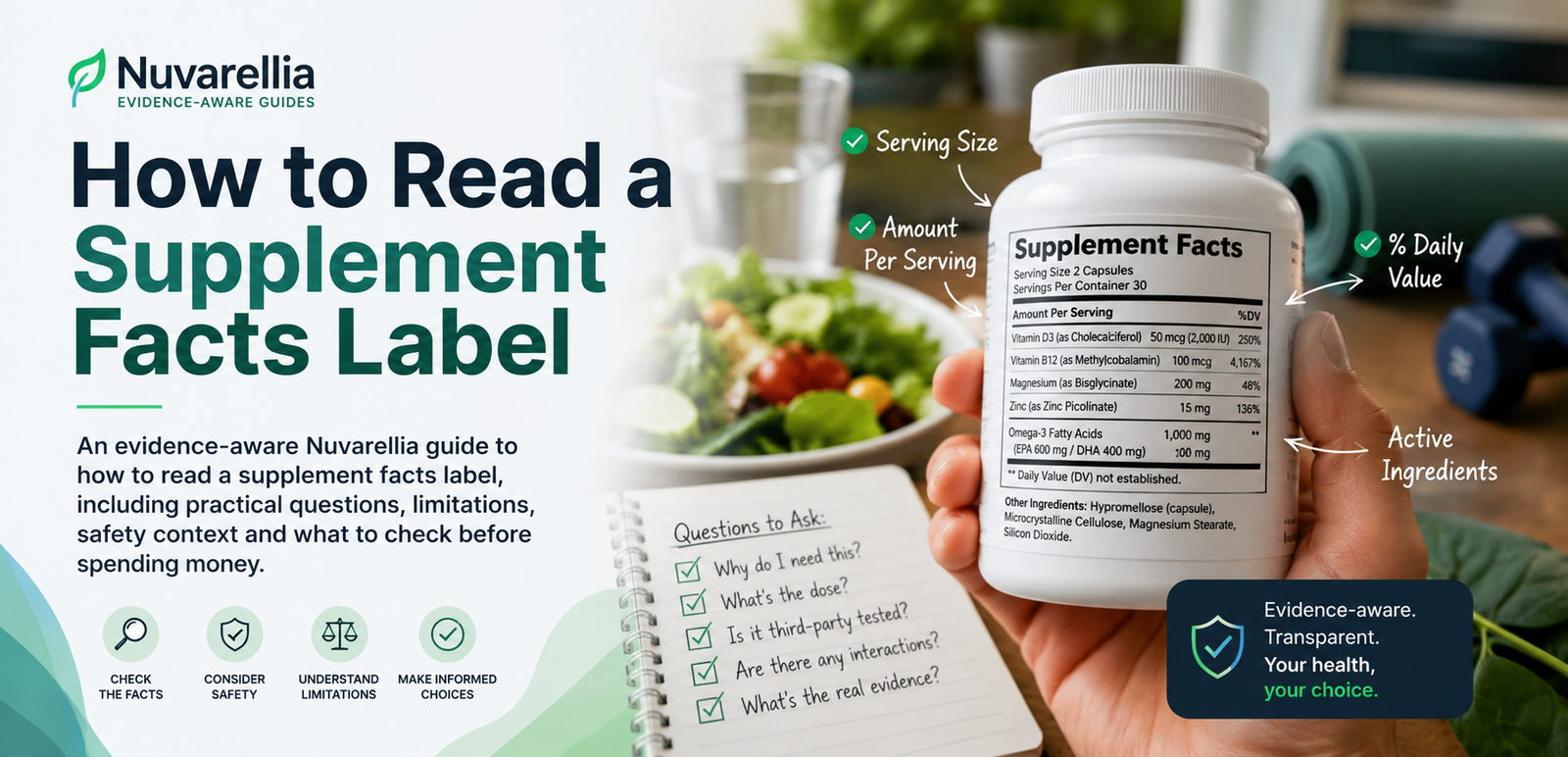
An evidence-aware Nuvarellia guide to how to read a supplement facts label, including practical questions, limitations, safety context and what to check before spending money.
Read guide →Omega-3 is a category, not one interchangeable ingredient. EPA, DHA and ALA come from different sources and have different evidence. Prescription omega-3 products can lower high triglycerides, but standard fish-oil supplements are not proven all-purpose heart-protection pills.
Read guide →Creatine monohydrate is one of the better-studied exercise supplements, with its clearest benefits in repeated high-intensity activity and resistance training. This evidence-based guide separates those established uses from less certain claims about cognition and healthy aging, while covering dosing, water-weight changes, kidney-test interpretation, and product quality.
Read guide →Protein needs are not one-size-fits-all. This evidence-based guide explains the U.S. adult protein RDA, situations where individualized intake may be appropriate, food-first ways to meet needs, what exercise and weight-loss research actually shows, and when supplement marketing gets ahead of the evidence.
Read guide →